

Associate Professor at the Institute of Biology of the University of Campinas, where he leads the Laboratory of Immunoinflammation. He earned his Bachelor's degree in pharmacy and biochemistry from the University of São Paulo (2005). He completed his Ph.D. in Physiology at the same institution in 2010, including a research period at the University of Cambridge. He conducted postdoctoral research at the University of São Paulo (2010-2012), supported by FAPESP. His academic achievements include being elected an Affiliated Member of the Brazilian Academy of Sciences (2016-2020). His research focuses on elucidating the molecular mechanisms that govern the interaction between the gut microbiota and the host immune system. In particular, he investigates short-chain fatty acids and their receptors, aiming to understand how they modulate immune responses under both physiological and pathological conditions, including inflammation and infection. His work integrates cellular immunology, metabolism, and microbiota research to identify molecular targets for the development of innovative therapeutic strategies.

Associated Professor of Immunology at the Department of Genetics, Microbiology, and Immunology of the Institute of Biology at the Universidade Estadual de Campinas, where he leads research in the Laboratory of Immunometabolism. He earned his Doctor of Veterinary Medicine degree from the University of Brasília (2006), a Master's degree in Immunopathology and Allergy from the School of Medicine at the University of São Paulo (2009), and a Ph.D. in Immunology from the Department of Immunology, Institute of Biomedical Sciences, University of São Paulo (2011), including a research period at the Beth Israel Deaconess Medical Center, Harvard Medical School. He completed postdoctoral training in the Division of Endocrinology, Metabolism, and Diabetes at the same center, focusing on immunometabolic interactions. He has received numerous recognitions, including being the only Researcher from Latin America nominated for the Aldi Award in Diabetes Research (2019, Helmholtz, Germany) and election as an Affiliated Member of the Academy of Sciences of the State of São Paulo.

Associate Professor (Livre-Docente) in the Department of Biochemistry at the Institute of Biology, University of Campinas (Unicamp), where he leads the Neuroproteomics Laboratory, founded in 2014, after serving for two years as a Principal Investigator at LMU (Ludwig Maximilians Universität München). His research focuses on mass spectrometry–based proteomic analysis and systems biology applied to clinical and preclinical models of psychiatric disorders. He earned a degree in Biological Sciences from the University of Campinas (99–03) and obtained his PhD in Functional and Molecular Biology from the same institution (04–08), including a sandwich period at the Max Planck Institute of Psychiatry, Germany, where he also completed a postdoctoral fellowship (08–10). He carried out a second postdoctoral fellowship at the University of Cambridge, United Kingdom (10–12), where he also led the Mass Spectrometry Group at the Cambridge Center for Neuropsychiatric Research and served as a consultant for Psynova Neurotech Ltd. He was elected to the Council of the Human Proteome Organization (15–17) and served as President of the Human Brain Proteome Project (23–25). He is an elected faculty representative to the University Council of Unicamp (CONSU) and was an Affiliated Member of the Brazilian Academy of Sciences (17–21) and of the São Paulo State Academy of Sciences (19–23). He served as one of the Area Coordinators for Biology at FAPESP (18–25), as a Member of the CNPq Advisory Committee (CA-BF) (22–25) and head of Department (22-24).

Associate Professor of Virology from the Institute of Biology at the University of Campinas. Area Coordinator for Biomedical Sciences 2 at FAPESP. He earned his Bachelor's (2001) and Licentiate (2002) degrees in Biology from FFCLRP-USP, his Master's (2005) and PhD (2009) in Cellular, Molecular and Pathogenic Bioagent Biology from FMRP-USP. He completed postdoctoral training focusing on viral pathogenesis and immune responses at FMRP-USP (2009-2012) and Washington University in St. Louis, USA (2013-2015). He has served on the board and as secretary of the Brazilian Society for Virology (2020-2024), coordinated FAPESP programs on Zika, and acted as advisor to UNICAMP's General Coordination Office (2025). He is an editor and reviewer for national and international journals and has received numerous awards for scientific contributions. He coordinates the Laboratory of Emerging Virus Studies (LEVE), a center for cutting-edge research on arboviruses and emerging respiratory viruses. His research investigates the pathogenic mechanisms of emerging viruses, including Oropouche, Zika, Chikungunya, human bocavirus, and SARS-CoV-2, using animal and cell culture models to dissect the roles of innate and adaptive immune responses in viral replication, neurovirulence, and persistence.

Associate Professor in Immunology at the Institute of Biology, University of Campinas. He earned his B.Sc. in Biological Sciences (UNICAMP, 2002), M.Sc. in Clinical Medicine (2004), and Ph.D. in Clinical Medicine/Neuroimmunology (2009), with a sandwich period at the Max Planck Institute for Neurobiology, Germany (2005-2006). He completed a postdoctoral fellowship at UNICAMP (2009-2012) and is nationally and internationally recognized for research in autoimmunity and neuroimmunology, including the Aluizio Marques and Roberto Melaragno Filho Awards (2013). Current associate Director of the Institute, and former Department Head (2019-2022), his research focuses on autoreactive T cell responses, investigating mechanisms of autoimmunity and neuroimmunology, as well as T cell functions in human and experimental autoimmune diseases, emphasizing cytotoxic and regulatory processes that influence the clinical course of these disorders.

Associate Professor at the Department of Biochemistry and Tissue Biology, Institute of Biology, University of Campinas (UNICAMP). He holds a Bachelor's degree in Biomedical Sciences from the Federal University of São Paulo (2002) and a Ph.D. in Molecular Biology from the same institution (2007), including a research period at the Max Delbrück Center for Molecular Medicine in Germany. He completed postdoctoral training at the Joslin Diabetes Center/Harvard Medical School (2007-2011). Former Assistant Professor at the Department of Biophysics, UNIFESP (2011-2016), he currently serves at UNICAMP, having been head of the Department of Biochemistry and Tissue Biology (2017-2021) and International Research Coordinator of the Institute of Biology (2018-2020). A former affiliated member of the Brazilian Academy of Sciences and founder of the Laboratory of Aging and Metabolism, his research focuses on integrative physiology and the molecular biology of aging and metabolism, investigating molecular mechanisms underlying metabolic syndrome and the aging process.

Associate Professor at the School of Pharmaceutical Sciences at the State University of São Paulo/Araraquara (UNESP). She holds a degree in Biological Sciences from the University of São Paulo (USP-1994), a Master's degree (1998) and a Ph.D. (2002) in Basic and Applied Immunology from FMRP-USP. She completed postdoctoral training at the School of Pharmaceutical Sciences of Ribeirão Preto (2003-2005), University of Michigan (2007-2009), and Vanderbilt University (2019-2020). She served as coordinator of the Graduate Program in Biosciences and Biotechnology Applied to Pharmacy (2021-2024) and is Secretary-General of the Brazilian Society for Immunology (SBI, 2026-2027). Her research focuses on cellular immunology and immunometabolism, examining the role of metabolic pathways in the activation of dendritic cells and CD4+ T lymphocytes during efferocytosis of apoptotic cells in infection and cancer models.
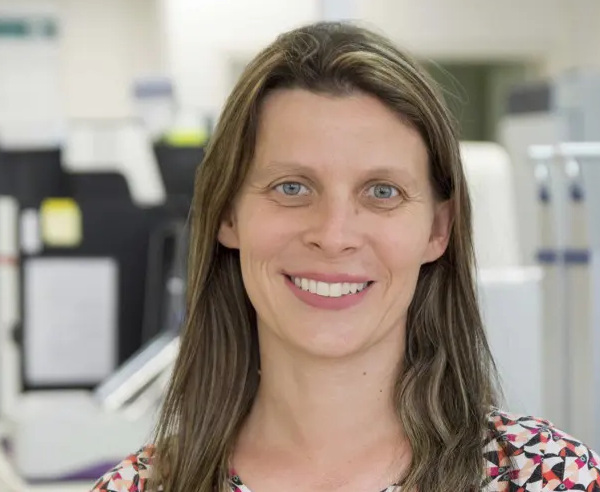
Researcher at the Center for Molecular Biology and Genetic Engineering, University of Campinas (UNICAMP). She earned her Pharm.D. degree from the Federal University of Santa Maria (1996), an M.Sc. in Pharmaceutical Sciences from the Universidade de São Paulo (2000), and a Ph.D. in Genetics/Molecular Biology and Bioinformatics from the University of California- San Diego (2009), followed by postdoctoral training at UCSD (2009-2011). Since 2017, she has coordinated the Center for Medicinal Chemistry (CQMED-UNICAMP), an EMBRAPII Industrial Innovation Unit in Pharmaceuticals and Biopharmaceuticals, and currently coordinates the INCT OpenMedChem (2014 call; 2023-2024 block), supported by FAPESP. Currently, she has active collaborations with the University of Oxford, the University of California, San Diego, the University of Tübingen, and the Structural Genomics Consortium. Her research focuses on RNA-binding proteins in disease, medicinal chemistry, bioinformatics, and recombinant proteins for diagnostics.

Assistant Professor at the Institute of Biology of the University of Campinas. She earned her B.Sc. in Biological Sciences from the Pontifical Catholic University of Campinas (2009), followed by an M.Sc. (2012) and Ph.D. (2015) in Functional and Molecular Biology at the University of Campinas, including a sandwich period at Deakin University. She completed postdoctoral training at UNICAMP (2016-2021; 2021-2022) and at The University of Melbourne (2018), supported by FAPESP and CNPq fellowships. Her research investigates molecular and metabolic mechanisms underlying cancer-pregnancy interactions, applying integrative omics approaches to placental biology and tumor cachexia.

Associate Professor at the School of Applied Sciences, University of Campinas/UNICAMP. She earned her B.Sc. in Nutrition from UNESP/Botucatu (2004), M.Sc. in Pathophysiology in Clinical Medicine from FMB/UNESP/Botucatu (2007), and Ph.D. in Health Sciences - Human Physiology from ICB/USP (2011), with postdoctoral training at the same Institute (2011-2012). She conducted research fellowships at the Babraham Institute (UK, 2018), King's College London (UK, 2022), and Vanderbilt University (USA, 2024). She maintains international collaborations with the University of Southampton (UK), King's College London (UK), the University of Pretoria (South Africa), and Vanderbilt University (USA). Her research focuses on cutaneous wound healing, psoriasis, fatty acids, and diabetes, integrating experimental and nutritional approaches.

Senior Researcher at the National Cancer Institute, Head of the Bioinformatics and Computational Biology Laboratory, and faculty at the INCA Graduate Program in Oncology. She earned a B.Sc. in Biochemistry from UFV (2008), an M.Sc. in Agricultural Biochemistry from UFV (2010), and a Ph.D. in Bioinformatics from UFMG (2014), including a sandwich period at the NIH in the USA. She completed postdoctoral training at the Gene Center, LMU München, Germany, and as a visiting researcher at the University of Birmingham, UK. FAPERJ Young Researcher and CNPq Productivity Fellow Level 2, and an affiliated member of the Brazilian Academy of Sciences, she co-founded the startups OneSkin and Spectra. Her research focuses on integrating multi-omics data and applying artificial intelligence to cancer.

Assistant Professor at the Department of Cellular and Molecular Biology and Pathogenic Bioagents, Faculty of Medicine of Ribeirão Preto, USP. She earned a B.Sc. in Biological Sciences from the University of Brasília (2007) and a Direct Ph.D. in Cellular and Molecular Biology from FMRP-USP (2012), with a visiting period at Yale University, USA. She completed postdoctoral training at St. Jude Children’s Research Hospital, USA (2014-2017) and FMRP-USP (2012-2014). She has received national and international awards, including the IUIS Rising Star (2023), and is an affiliated member of the Brazilian Academy of Sciences (2023). Her research focuses on innate immunity, autophagy, efferocytosis, and molecular mechanisms regulating immune responses in inflammatory diseases, cancer, and host-pathogen interactions.

Assistant Professor at the School of Health Sciences, PUCRS, and a Permanent Faculty member of the Graduate Programs in Pediatrics and Dentistry. She holds a B.Sc. in Biochemical Pharmacy (UFSM, 2003), M.Sc. in Biotechnology (UFSC, 2006), Ph.D. in Cellular and Molecular Biology (PUCRS/University of Melbourne, 2009), and postdoctoral training in Immunology (PUCRS). She coordinated the Pharmacy undergraduate program (2024) and was a Visiting Professor at Imperial College London (2029, CAPES-PRINT). Her research focuses on immunology and cellular and molecular biology, including vaccines, viral immunology, anti-tumor and antiviral therapies, T cells, dendritic cells, and microbiota.
Vitor Rosetto Muñoz

Graduated in Sports Science from the Faculty of Applied Sciences at UNICAMP. Completed a master's degree in Nutrition, Sports, and Metabolism Sciences at the Laboratory of Molecular Biology of Exercise (LABMEX), including an international research internship (BEPE/FAPESP) at The Ohio State University, under the supervision of Prof. Kristin Stanford. Also earned his PhD at LABMEX/FCA-UNICAMP, under the supervision of Prof. José Rodrigo Pauli. Completed his postdoctoral research (2021-2026) at the Laboratory of Exercise Physiology and Metabolism (LAFEM) at the School of Physical Education and Sport of Ribeirão Preto, University of São Paulo (EEFERP-USP), under the supervision of Prof. Adelino Sanchez Ramos da Silva. Between 2022 and 2024, he carried out an international research internship in the laboratory of Prof. C. Ronald Kahn at the Joslin Diabetes Center, Harvard Medical School. His research focuses on novel mechanisms that improve insulin sensitivity in conditions such as metabolic syndrome, type 2 diabetes, and aging. He is currently a Young Investigator of FAPESP and the coordinator of the Metabolic Exploration Lab (METAEX) at the Institute of Biology, UNICAMP. In this phase, he will investigate the connection between gut microbiome-derived metabolites and liver metabolism, aiming to describe new molecular mechanisms that explain host-microbiota interactions.
Cristhiane Favero de Aguiar

Junior Group Leader at the Institute of Biology, University of Campinas (UNICAMP), Brazil, supported by FAPESP and the CNPq Conhecimento Brasil Programme. She was a Marie Skłodowska-Curie Actions (MSCA) Postdoctoral Fellow in Dr. David Finlay’s laboratory at Trinity College Dublin, Ireland. She completed postdoctoral training at the Laboratory of Immunometabolism at UNICAMP. She holds a PhD in Immunology from the University of São Paulo (USP), including a research period at the La Jolla Institute for Allergy and Immunology, an MSc in Sciences from the Federal University of São Paulo (UNIFESP), and a BSc in Biomedical Sciences from the Federal University of Triângulo Mineiro (UFTM). Her research program focuses on understanding how metabolic pathways regulate immune cell function within distinct tissue environments and how these mechanisms contribute to immune regulation in health and disease. Throughout her academic career, she has developed an interdisciplinary research line integrating immunology, metabolism, and tissue biology, with a particular focus on tissue-resident immune cells, such as iNKT cells. Her research combines omics approaches with single-cell metabolic analyses to investigate how nutrient availability and metabolic adaptation shape immune cell function.
Krist Antunes Fernandes

Assistant Professor at the PUCRS School of Medicine and Coordinator of the Pediatric Nutrition and Mucosal Immunology Research Group. Holds a Bachelor's degree in Nutrition and M.Sc. and Ph.D. degrees in Pediatrics and Child Health from PUCRS, with research conducted in collaboration with the University of Campinas (UNICAMP). Completed a visiting Ph.D. fellowship at Imperial College London and postdoctoral training at PUCRS in collaboration with OM Pharma (Switzerland), followed by a position as Postdoctoral Research Associate at Princeton University. Recipient of the 2022 CAPES Thesis Award in Medicine II and selected as a Pew Latin American Fellow in the Biomedical Sciences (2024). Research interests focus on microbiota, nutrition, and immune development in early life, particularly how maternal factors shape mucosal immunity and antiviral responses in offspring.